
Shoppers comparing Chevrolet new car options for 2026 will find a lineup shaped less by one dramatic redesign than by several strategic shifts: more electric choices, broader driver-assistance availability, refreshed infotainment, and continued investment in trucks and three-row SUVs. The practical question is not simply which Chevy is newest. It is which update changes the ownership case for your budget, driving pattern, towing needs, and technology expectations.
This guide examines the major model updates, the newest Chevrolet SUVs, enhancements across Chevy truck models—especially the Silverado—and the pricing factors that can make one trim a better value than another. Product timing, equipment, and transaction prices can vary by market, so shoppers should confirm final specifications and incentives with Chevrolet and local retailers before ordering.
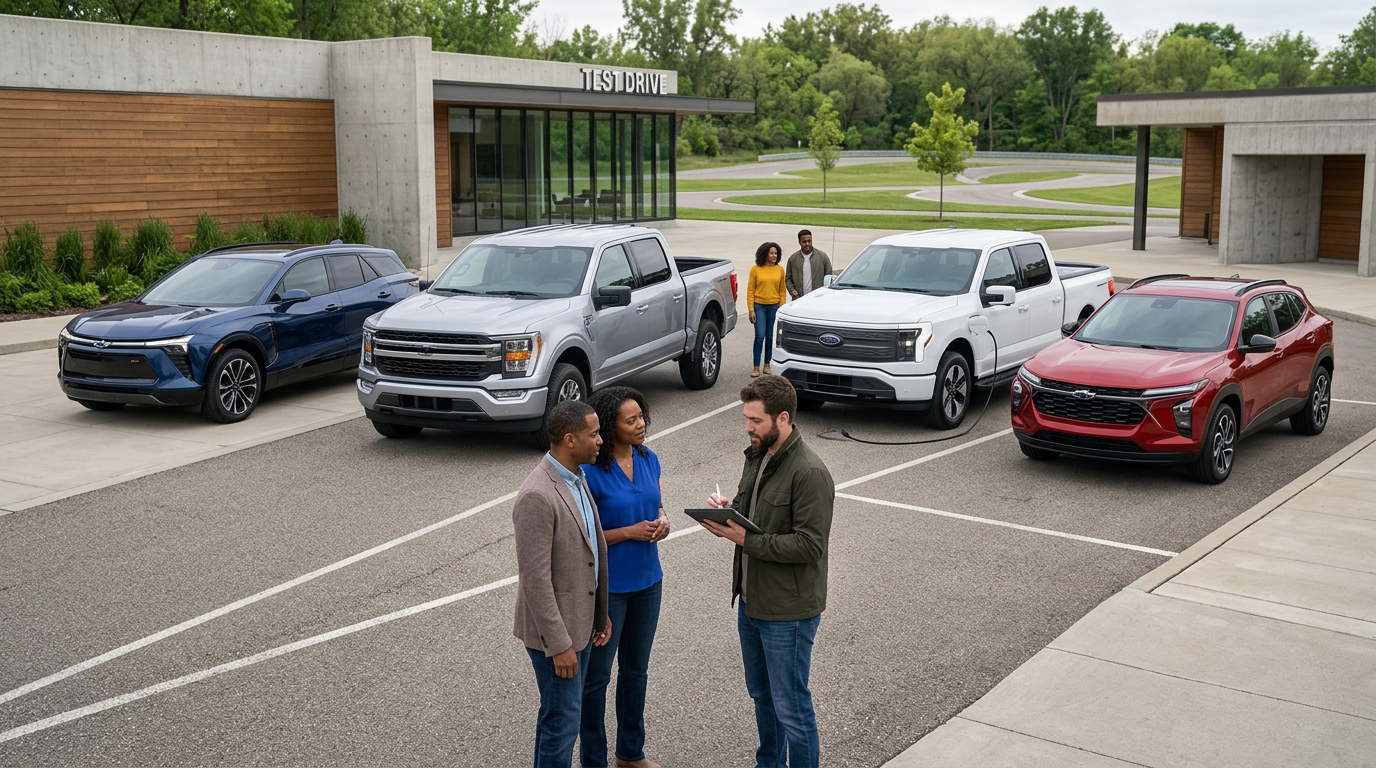
The 2026 strategy: more choice without abandoning familiar formats
Chevrolet’s approach for 2026 reflects two competing buyer preferences. Many customers want lower-emission electric transportation and modern cabin technology, while others still need gasoline power, long range, fast refueling, or serious payload and towing capability. Chevy’s answer is a mixed portfolio rather than an all-at-once transition.
- Compact and midsize crossovers: practical entry points such as the Trax, Trailblazer, Equinox, and Blazer serve different space and performance needs.
- Family SUVs: the Traverse, Tahoe, and Suburban remain aimed at buyers who prioritize passenger room and towing.
- Trucks: Colorado and Silverado cover midsize through heavy-duty work, with gasoline, diesel, and electric configurations depending on model.
- Performance and lifestyle models: Corvette and other specialty vehicles occupy a different value equation from mainstream Chevrolet vehicles.
That breadth is useful, but it also makes trim-by-trim comparison essential. A lower-priced model may lack the range, cargo flexibility, or standard safety technology that initially attracted you to a more expensive one.
Equinox and Equinox EV make the compact SUV decision more consequential
The conventional Equinox continues to be one of Chevrolet’s most important volume models, while the Equinox EV gives buyers a similarly recognizable name in an electric format. The distinction matters because the two vehicles are not simply powertrain versions of the same SUV: their packaging, charging requirements, driving feel, and pricing structure differ.
The gasoline Equinox is generally the easier choice for apartment dwellers, rural drivers, and households that need quick refueling. The Equinox EV can make more sense for commuters with home charging, especially when local electricity rates and incentives are favorable. Review these factors before focusing on advertised monthly payments:
- Confirm whether the EV fits your daily mileage with a reasonable charging reserve.
- Compare cargo dimensions and rear-seat comfort rather than relying only on exterior length.
- Price the required home-charging equipment and installation separately.
- Check whether a selected trim includes the driver-assistance and connectivity features you value.
Ask a retailer for an out-the-door comparison between equivalent gasoline and electric equipment levels. That exposes taxes, destination charges, accessories, and available incentives that a headline MSRP may not show.
New Chevrolet SUVs focus on family flexibility and larger-screen usability
Chevrolet’s SUV range now spans small urban crossovers through full-size three-row vehicles, giving the brand a way to respond to buyers who have moved away from traditional sedans. The newest-generation Traverse is especially important for families who need usable third-row space without stepping immediately into a Tahoe or Suburban. Larger SUVs continue to offer substantial towing and cargo capacity, but their fuel, tire, insurance, and parking costs can rise quickly.
| Vehicle type | Best fit | Main tradeoff |
|---|---|---|
| Trax or Trailblazer | Urban use, lower entry cost, modest passenger needs | Less towing and third-row flexibility |
| Equinox or Blazer | Everyday family use with more space and equipment | Higher trims can approach larger-SUV pricing |
| Traverse | Frequent family travel and genuine three-row use | Larger footprint and higher operating costs |
| Tahoe or Suburban | Maximum passenger, cargo, or towing capability | Fuel economy, purchase price, and maneuverability |
During a test drive, bring the car seats, luggage, or sports equipment you actually use. A showroom walkaround cannot establish whether the third row remains practical with a full cargo area.
Silverado updates remain focused on capability, technology, and configuration choice
The Silverado remains the reference point for evaluating Chevy truck models because it covers a wide range of jobs: light-duty commuting, recreational towing, construction work, and heavy-duty hauling. For 2026, the buying decision continues to center on choosing the right cab, bed, engine, axle ratio, and trailering equipment rather than simply selecting a high trim.
Depending on configuration and availability, shoppers may compare turbocharged gasoline engines, a diesel option, and heavy-duty powertrains. The Silverado EV adds a separate electric-truck path, with potential advantages in quiet operation, instant torque, and home-charging convenience. Its suitability depends more heavily on towing distance, payload, weather, and charging access than on the truck’s maximum advertised capability.
- For occasional towing: prioritize a properly equipped half-ton Silverado and verify the trailer’s loaded weight.
- For long-distance towing: examine fuel or charging stops, range loss, payload, and hitch weight.
- For work use: compare payload stickers and bed dimensions, not just maximum tow ratings.
- For family use: test rear-seat access, storage, cameras, and ride comfort before paying for a work-oriented package.
Request a written build sheet and a tow-rating explanation for the exact vehicle identification number. “Silverado” is a broad family, and capabilities can change substantially between configurations.
The Silverado EV expands the electric truck choice but changes the ownership calculation
The Silverado EV is aimed at buyers who want full-size truck space and strong electric performance without giving up the familiar pickup format. Its appeal is strongest when the owner can charge at home, drives a predictable daily route, and uses the truck for hauling or towing within a manageable distance. It is a less obvious choice for buyers who regularly tow heavy trailers hundreds of miles through areas with limited fast-charging coverage.
Electric trucks can also have lower routine energy and maintenance costs, but purchase price, tire replacement, insurance, charging hardware, and depreciation deserve equal attention. A careful comparison should include the whole ownership period rather than assuming fuel savings automatically offset a higher transaction price.
- Record your normal weekly mileage and the longest regular trip.
- Estimate home-charging installation and your local electricity rate.
- Check payload after passengers and accessories are included.
- Use the truck’s towing range guidance for your trailer, not the unloaded range figure.
- Compare lease and purchase terms if technology change and resale uncertainty concern you.
Before choosing the Silverado EV, complete at least one realistic charging-and-towing route plan. That exercise often reveals whether the electric premium is justified for your use.
Colorado keeps midsize trucks relevant for buyers who do not need a full-size bed
The Colorado occupies an important middle ground in the 2026 range. It is easier to maneuver and park than a full-size Silverado, yet it offers more utility than a crossover for buyers carrying outdoor gear, tools, or smaller trailers. Its proportions can also make it a better daily driver for households that rarely use maximum towing capacity.
The tradeoff is that a midsize truck cannot duplicate the Silverado’s cabin width, payload margin, or heavy-duty towing confidence. Off-road-oriented trims may add meaningful hardware such as specialized tires, suspension tuning, or underbody protection, but those features can reduce fuel economy and increase tire costs.
- Measure your garage and parking space before selecting a wider truck.
- Compare bed length with the items you actually transport.
- Confirm payload for passengers, camping equipment, and a trailer tongue.
- Ask whether an off-road package adds capability you will use or only visual appeal.
Colorado shoppers should price a well-equipped midsize truck against a base or mid-trim Silverado. The result is not always intuitive once equipment and financing are included.
Cars and specialty Chevrolets remain a smaller but distinct part of the lineup
Chevrolet’s mainstream strategy is now SUV- and truck-led, but the brand’s specialty cars still matter to shoppers whose priorities are performance, style, or open-air driving rather than maximum utility. Corvette occupies a premium performance position, while the broader Chevrolet portfolio no longer offers the same sedan breadth that defined earlier lineups. Buyers replacing an older Malibu or another traditional family car should therefore compare crossovers on seating position, cargo access, ride quality, and fuel economy—not assume every SUV is a direct substitute.
Specialty models also follow a different pricing pattern. Availability, dealer-installed equipment, demand, and allocation can have a greater effect on transaction price than they do for high-volume crossovers. Performance tires, premium brakes, insurance, and maintenance should be included in the budget.
If your priority is a comfortable commuter, test a compact SUV and a midsize sedan from competing brands back-to-back. If your priority is performance, compare braking, seating ergonomics, track capability, and warranty terms rather than relying on horsepower alone.
Technology upgrades are valuable only when they reduce daily friction
Across the latest Chevrolet vehicles, technology is becoming a more visible part of the ownership proposition. Larger displays, connected services, smartphone integration, configurable cameras, and available hands-free or advanced driver-assistance features can improve convenience. They can also add subscription costs, learning curves, and repair complexity.
Driver assistance should be evaluated as a support system, not as autonomous driving. Read the operating restrictions, keep your attention on traffic, and test whether lane-centering, adaptive cruise control, parking cameras, and trailer guidance work naturally for you.
- Check screen glare and physical control access in daylight.
- Ask which connected features require a trial period or recurring fee.
- Test phone pairing with every regular driver’s device.
- Confirm camera views and sensor coverage when towing or parking.
- Review software-update policy and what happens if connectivity ends.
During a demonstration, ask the salesperson to show three tasks you perform often—navigation, trailer setup, and climate control, for example. Useful technology should be understandable before the sale, not merely impressive on a specification sheet.
Chevrolet vehicle prices are likely to diverge by powertrain and equipment
There is no single 2026 Chevrolet vehicle price trend. Entry-level crossovers compete aggressively on monthly payment, while large SUVs, heavily equipped trucks, and electric models can carry much higher MSRPs. EV pricing may also be affected by federal, state, or utility incentives, eligibility rules, lease structures, and changing battery costs. Incentives should be treated as conditional, not guaranteed savings.
| Shopping tier | Typical price pressure | What to compare |
|---|---|---|
| Compact crossover | Competitive MSRP and frequent finance incentives | Standard safety, destination fee, warranty, fuel cost |
| Midsize SUV or truck | Equipment packages can raise price quickly | Space, towing hardware, tires, interest paid |
| Full-size SUV or truck | Capability and trim demand create a wide spread | Payload, engine, bed or cargo needs, insurance |
| Electric vehicle | Incentives and charging costs can change effective value | Net purchase price, home charger, range, resale outlook |
Compare out-the-door prices with at least two segment peers, such as a Ford, Toyota, Hyundai, Kia, Ram, or GMC alternative. Include financing rate, trade-in value, destination, accessories, and five-year operating costs to avoid mistaking a low advertised payment for a low total price.
A 2027 Chevys preview should make buyers cautious about timing claims
Early discussion of 2027 Chevys can be useful for shoppers deciding whether to buy now, lease, or wait, but future-model information is often incomplete until Chevrolet publishes official specifications. A preview may point to additional electric variants, software changes, trim reshuffling, or incremental powertrain updates; it should not be treated as a promise of a specific feature, price, or launch date.
Waiting can provide newer technology and potentially improve resale age, but it can also mean fewer incentives, limited initial inventory, or first-year availability constraints. Conversely, a 2026 model may offer proven equipment, dealer discounts, and a clearer reliability record.
- Separate confirmed manufacturer announcements from dealer rumors and informal reports.
- Ask whether a desired 2026 feature is being changed or discontinued.
- Compare the cost of waiting, including current transportation and financing rates.
- Get the purchase offer in writing and check its expiration date.
Wait for a 2027 model when a coming change directly solves a requirement you cannot compromise on. Otherwise, judge the available 2026 vehicle on its actual price and equipment rather than on speculation.
A disciplined Chevrolet comparison starts with use case, not trim level
The broad lineup can make online shopping feel like a trim-name exercise, but the better sequence is to define the job first. A commuter, growing family, contractor, and recreational tower may all describe their ideal vehicle as a “Chevy SUV” or “Chevy truck,” yet need very different configurations.
- Write the non-negotiables: passenger count, cargo dimensions, tow weight, parking limits, and charging access.
- Choose the vehicle class: compact crossover, midsize SUV, three-row SUV, midsize truck, full-size truck, or EV.
- Identify required equipment: not merely preferred appearance packages.
- Build two configurations: one value-focused and one that includes every must-have.
- Compare ownership cost: payment, fuel or electricity, maintenance, insurance, tires, and fees.
- Drive both: include highway merging, tight parking, rear-seat access, and trailer practice where relevant.
This process helps prevent paying for capability that will never be used while avoiding a false economy that leaves out an essential feature.
FAQ: practical questions about the 2026 Chevrolet range
Q: What is the most important change in the 2026 Chevrolet lineup?
A: The most meaningful shift is the continued expansion of electrified choices alongside updated gasoline SUVs and trucks. The practical benefit depends on charging access, travel patterns, and the price difference between comparable configurations.
Q: Is the Silverado EV a replacement for every gasoline Silverado?
A: No. It can suit daily driving, local hauling, and some towing needs, but long-distance towing, payload, charging availability, and route planning may favor a gasoline or diesel Silverado.
Q: Which new Chevrolet SUV is best for a family?
A: There is no universal answer. A Trax, Trailblazer, or Equinox may suit smaller households, while Traverse is more appropriate for regular three-row use. Tahoe and Suburban add space and towing but bring higher purchase and operating costs.
Q: Will 2026 Chevrolet vehicles be cheaper than comparable competitors?
A: Price competitiveness varies by trim, incentives, financing, and equipment. Compare out-the-door pricing and ownership costs with direct segment peers rather than comparing base MSRPs alone.
Q: Should I wait for 2027 Chevrolets?
A: Wait if a confirmed upcoming change is essential to your needs. If not, compare available 2026 inventory, incentives, warranty coverage, and financing with the uncertain cost and timing of a future model.
How to take the next step without overbuying
Start with a shortlist of two or three vehicles from different Chevrolet categories, then request itemized quotes for matching equipment. Ask specifically about destination charges, dealer accessories, documentation fees, financing terms, lease mileage limits, and the treatment of current incentives. For electric models, obtain a separate home-charging estimate and verify every applicable incentive.
- Bring your trade-in payoff and maintenance records.
- Test the exact trim and powertrain you intend to buy.
- Check payload and tow labels on the actual truck.
- Calculate insurance and energy costs before signing.
- Keep a written comparison with at least one competing brand.
Chevrolet’s 2026 lineup is broad enough to meet very different priorities, but that breadth rewards careful matching. The strongest purchase is the model whose capability, technology, and total cost fit your real routine—not necessarily the newest badge or highest trim.